
There is growing demand from stakeholders across the building and construction industries, including governments and end consumers to adopt genuinely sustainable practices. How can the sector successfully embrace sustainability with commercially viable solutions?
The challenges of a growing industry
The forecast looks bright for the Australian construction industry, thanks to a growing population that is driving demand for housing and infrastructure. Despite the promising outlook, continued growth has come with a new set of challenges. As more than 25 million tonnes of construction and demolition waste is generated in Australia annually, the industry is being challenged to find and adopt more sustainable building practices.
Both industry and government stakeholders alike are focused on minimising waste and reducing the embodied carbon of their projects, whilst also improving the efficiency and circularity of materials. However, while there is broad recognition of the importance of adopting sustainable practices, the challenge facing the industry today is how to implement an end-to-end solution for the greatest benefit.
Building a circular economy
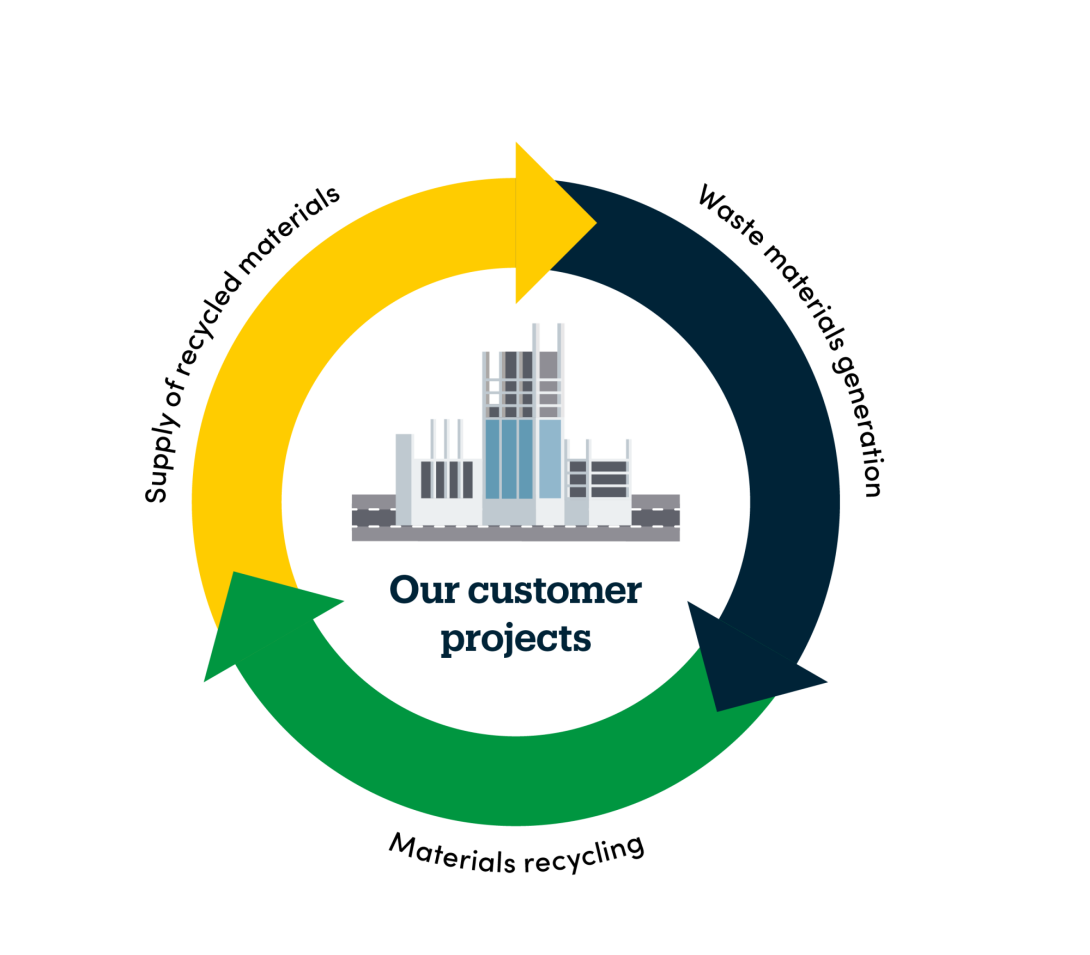
The good news is, there is a simple and effective way to design out waste and improve sustainability across every project stage, thanks to Boral’s industry-leading Circular Materials Solution (CMS). CMS provides visibility over materials flow, volume movement, recycling rates, products developed (using the recycled waste material) and the carbon reduction levels achieved. This is all summarised to the customer in reports provided throughout the project.
Most demolition waste such as brick, concrete, and steel are not at the end of their life cycle as a material, so there is a significant opportunity to recycle. Similarly, excavation waste materials such as sand, stone, and fill can be reclaimed, blended, or repurposed.
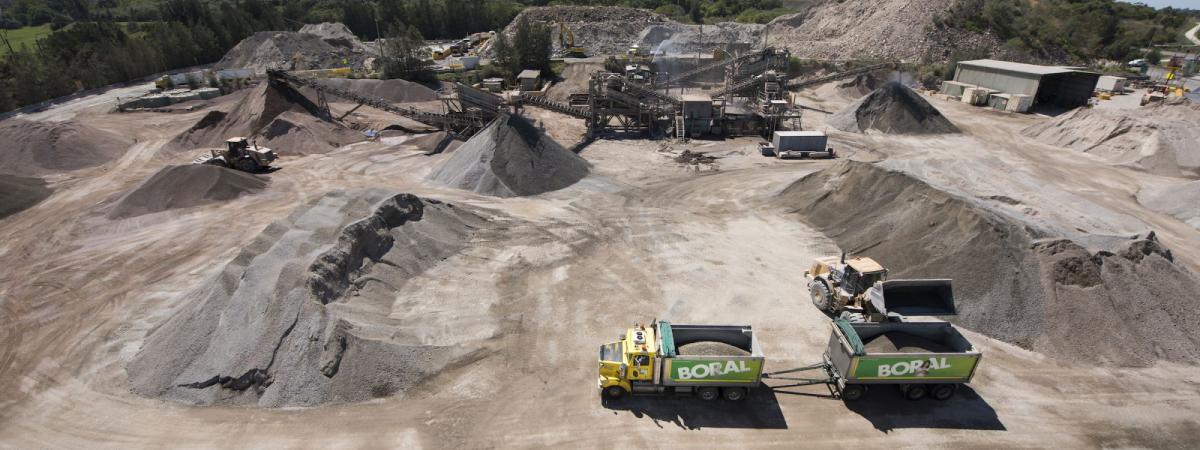
In a seamless process, demolition and excavation waste is collected from site and transported to a local Boral Recycling centre where it is processed and recycled for use in new, more sustainable building materials. These include:
- Recycled aggregates
- Specified and non-specified recycled road base
- Reclaimed concrete, sand and asphalt
- Specified and non-specified select fill
- Recycling pipe bedding sand; and others
In a recent CMS implementation case study, Mirvac, as part of its zero waste to landfill and net zero carbon goals, partnered with Boral to design out waste for its Green Square project. By working with Boral to ensure the right quantities of concrete were initially brought to site at the right time, and then diverting any excess concrete waste back to Boral for recycling, Mirvac was able to realise a reduction in their construction waste and have complete visibility over the material flow, disposal costs and waste management outcomes.
Success from early planning
By engaging early with Boral, developers and builders can implement circular design strategies that track against their sustainability targets throughout the entire project timeline.
- During the design stage, Boral’s experts help to identify recyclable or reusable demolition and excavation waste so it can be diverted from landfill in a simple, managed collection process.
- Boral then matches its recycled and lower carbon products to the specifications of each project’s requirements and delivers them to site as needed during the construction stage.
Full circle benefits
- Efficient, well planned waste removal reduces the impact on landfill and on the environment.
- Maximising recycled content ensures optimised use of resources and has the potential to reduce the overall embodied carbon of each project.
- Materials flow visibility gives developers and builders visibility of key sustainability metrics including recycling rates, volume movements, carbon reduction levels achieved, recycled products developed, etc. for their projects at every stage, enabling them to measure their progress towards sustainability targets.
- Better compliance and improved sustainability metrics give developers and builders better reporting of outcomes.
- Streamlined transportation through the use of local recycling centres, promoting site efficiencies, reductions in energy usage and transportation.
- Cost efficiencies are achieved by minimising waste disposal costs and optimising the use of more cost-effective construction resources.
A future-proof legacy
Transitioning to a circular economy has clear benefits for all stakeholders in the construction industry. Those who can truly embed sustainability into their operations will position themselves as innovative leaders and help drive the entire industry towards a net zero outcome. Now is the time for the industry to update its legacy for future generations.