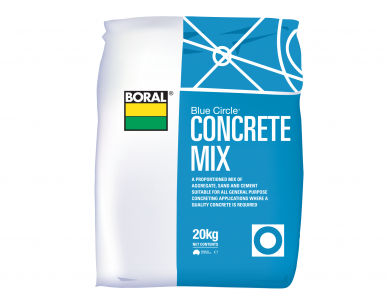
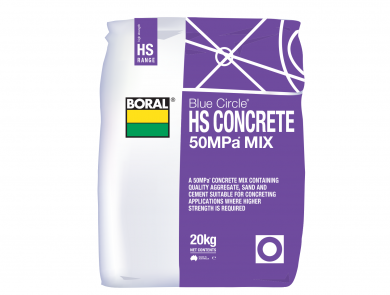
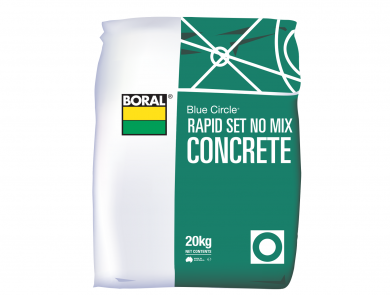
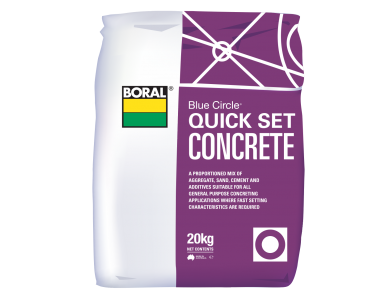
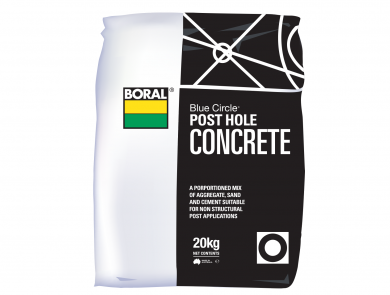
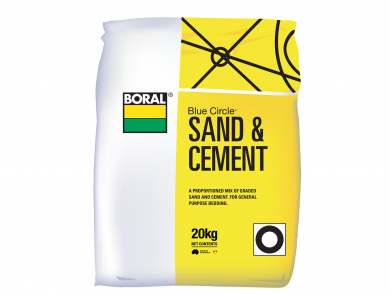
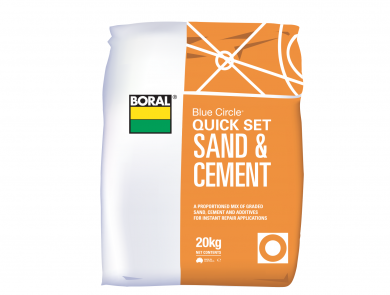
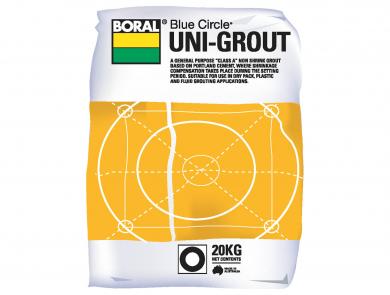
Cement Dry Mix - Ready Reckoner
Mix Design & Calculation Chart
![]() |
![]() |
![]() |
Mortar
|
Sand-Cement
|
Concrete
|

For slabs, paths and driveways
1. First calculate the area:
Area square metres(m²) = length x width (metres)
2. Then use the following table:
| Area (m²) |
Cubic metres(m³) needed. Slab thickness in mm. | ||||
| 50 | 75 | 100 | 125 | 150 | |
| 5 | 0.4 | 0.4 | 0.6 | 0.8 | 0.8 |
| 10 | 0.6 | 0.8 | 1.0 | 1.4 | 1.6 |
| 15 | 0.8 | 1.2 | 1.6 | 2.0 | 2.4 |
| 20 | 1.0 | 1.6 | 2.0 | 2.6 | 3.0 |
| 25 | 1.4 | 2.0 | 2.6 | 3.2 | 3.8 |
| 30 | 1.6 | 2.4 | 3.0 | 3.8 | 4.6 |
| 35 | 1.8 | 2.6 | 3.6 | 4.4 | 5.4 |
| 40 | 2.0 | 3.0 | 4.0 | 5.0 | 6.0 |
| 45 | 2.4 | 3.4 | 4.6 | 5.8 | 6.8 |
| 50 | 2.6 | 3.8 | 5.0 | 6.4 | 7.6 |
Yellow area: When using premixed bagged concrete as a guide 1 cubic metre (m³) requires 108 x 20kg bags
Blue area: 1 cubic metre (m³) of concrete contains roughly 2.5 tonnes of raw material. Non-trades customers with jobs that fall into the shaded area might wish to consider ordering premixed concrete from a ready-mixed supplier
Mixing Raw Materials
Suggested mix proportions by volume
| Materials | High Strength & water tight | General use, paths, floors etc | Foundations & large masses |
| cement | 1 | 1 | 1 |
| sand | 2 | 2.5 | 3 |
| stone or gravel | 3 | 4 | 5 |
Estimating How Much to Oder To fill 1 cubic metre (m³)
| Mix (as per concrete use) | No. 20kg bags of cement |
cubic metres (m³) of sand |
cubic metres (m³) of stones |
||
| Cement | Sand | Stone | |||
| 1 | 2 | 3 | 16 | 0.5 | 0.8 |
| 1 | 2.5 | 4 | 13 | 0.5 | 0.8 |
| 1 | 3 | 5 | 11 | 0.5 | 0.9 |
Buying Premix Bags: Concrete
Estimating the number of bags of concrete Mix by job size
| Cubic metres (m³) | .02 | .04 | .06 | .08 | 0.10 |
| No.20kg bags | 2 | 4 | 6 | 8 | 10* |
* 108 x 20kg bags of Boral Concrete Mix will fill 1 cubic metre
For fence posts and other round excavations
Calculate for each hole as:
| Depth of hole (mm) | Cubic metres(m³) needed. Hole diameter (mm). | ||||
| 300mm | 400mm | 500mm | 600mm | 700mm | |
| 200 | 0.01 | 0.03 | 0.04 | 0.06 | 0.08 |
| 400 | 0.03 | 0.05 | 0.08 | 0.11 | 0.15 |
| 600 | 0.04 | 0.08 | 0.12 | 0.17 | 0.23 |
| 800 | 0.06 | 0.10 | 0.16 | 0.23 | 0.31 |
| 1000 (1m) | 0.07 | 0.13 | 0.20 | 0.28 | 0.38 |
Post Calculations
Step1. |
Calculate entire hole volume. |
![]() |
Formula: |
TT r² h = 3.14 x (0.15m x 0.15m) x 0.5m = 3.14 x 0.0225 x 0.5 Volume = 0.0353m³ |
|
Step2. |
Calculate Post Area |
|
Formula: |
TT r² h = 3.14 x (0.075 x 0.075) x 0.5m = 3.14 x 0.00563 x 0.5 Volume = 0.00884m³ |
|
Step3. |
= Volume Step 1 – Volume Step 2 = 0.353m³ – 0.0088m³ = 0.02646m³ |
|
Step4. |
= Multiply by number of 20 kg bags per m³ (108 bags) = 0.02646m³ x 108 Therefore = 2.86 bags of 20 kg Concrete Mix, required to fix post in hole. |
Mixing Raw Materials
Suggested mix proportions by volume
| Materials | External Brick & Block Construction | Exposed to sea air or spray (within 1km of coast) | Internal rendering above damp course | Internal rendering below damp course |
| cement | 1 | 1 | 1 | 1 |
| sand | 6 | 4 | 6 | 3 |
| hydrated lime | 1 | 0.5 | 1 | - |
Buying Premix Bags: Mortar
Using Brickies Mortar to lay bricks Estimating bags by brick number
| No. bricks | 200 | 400 | 600 | 800 | 1000 |
| No. 20kg bags | 12 | 24 | 36 | 48 | 60 |
Laying bricks - Estimating how Much to order
| For every 1000 bricks | Bricks without frog | ||||
| cement | sand | hydrated lime | No. 20kg bags of cement | cubic metres (m3) of sand | No. 20kg bags of hydrated lime |
| 1 | 6 | 1 | 8 | 0.65 | 3 |
| 1 | 4 | 0.5 | 12 | 0.65 | 2 |
| 1 | 3 | - | 16 | 0.65 | - |
Which cement for what conditions?
Condition |
General Purpose Cement | Builders Cement | Pozzoment | Off-White Cement | High Early Strength Cement | Special Purpose Cement |
General - No specific requirements |
||||||
In Service - Exposure to weak acids |
||||||
Exposure to soft water (low in dissolved salts) |
||||||
Expose to sulphates (SO4)
|
||||||
<600mg/litre |
||||||
600-3000mg/litre |
||||||
>3000mg/litre |
||||||
Marine Environment - Permanently submerged in seawater |
||||||
Tidal or splash zone |
||||||
Marine atmosphere |
||||||
During Construction - Cold weather |
||||||
Early strength required for stripping of formwork |
||||||
Hot weather |
||||||
Mass concrete where rapid heat evolution is to be avoided |
||||||
Coloured concrete specified |
- Cement Product Resources
- Cement Dry Mixes Home
- Brochures
- Material Safety Data
- Reseller Locations
- Contact Us